How to construct an epoxy flooring sports court?
At present, acrylic is widely used as the main material for building epoxy flooring sports courts. Made of 100% acrylic resin, it is non-toxic and features excellent resilience. A micro rubber layer can be added as required to enhance the elasticity of the court surface. It boasts outstanding flatness, uniform elasticity and superior anti-slip performance, with stable color fastness, no fading, no blistering, no cracking and no mildew growth.
Performance Indicators of Acrylic Epoxy Sports Court:
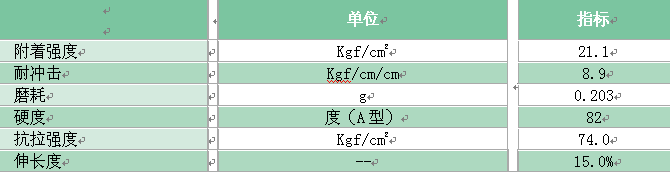
Due to its excellent performance indicators, acrylic materials are suitable for the construction of various sports courts, widely applied to the ground of tennis courts, basketball courts, badminton courts, volleyball courts and other sports venues.
Acceptance Standards for Completed Courts
SlopeControlled at about 5‰, and shall not exceed 8‰.
FlatnessThe height difference measured by a 4-meter straightedge shall not exceed 4 millimeters.
Concrete Strength GradeThe foundation structure must be equipped with waterproof treatment; C20 concrete fully meets the requirements.
Expansion Joint LayoutNo expansion joints shall be reserved in the active playing area for athletes.
Requirements for Concrete / Asphalt Concrete BaseThe base surface shall not be too rough, as excessive roughness will cause waste of coating materials; neither shall it be overly smooth, because an over-smooth surface will reduce the adhesion between the coating and the base, resulting in easy peeling of the coating.
Maintenance Notes for Courts in Use
Smoking and chewing gum are prohibited on the court. Colored drinks are not allowed to be spilled on the court surface.
During peak usage periods, the court shall be cleaned once a week. In off-peak periods, it shall be rinsed at least once every two to three weeks. When cleaning, water shall flow from the high slope to the low slope, and the surface shall be scrubbed with soft brushes.



